Table of Contents
- → Standard Blouse Stitching Price Ranges in 2026
- → Factor 1: Business Overhead & Operational Setup
- → Factor 2: Pattern & Design Construction Complexity
- → Factor 3: Hand Embroidery & Embellishment Hours
- → Factor 4: Bridal vs Non-Bridal Engineering
- → Factor 5: Delivery Urgency & Seasonal Peak Demand
- → Factor 6: Material Sourcing & Internal Structuring
- → Frequently Asked Questions (FAQs)
What Are the Standard Blouse Stitching Price Ranges?
If you have ever received a quote of ₹700 from a neighborhood tailor and a quote of ₹4,000 from a high-street boutique for what appeared to be a similar saree blouse, you are not alone. Price variation in custom garment tailoring is one of the most misunderstood aspects of the fashion and textile industry.
Unlike mass-produced ready-to-wear clothing manufactured on automated assembly lines, custom stitching is a purely skill-driven, labor-intensive service. The final charge reflects not just thread and fabric, but pattern engineering, master cutting expertise, fitting session allocations, and workshop overhead.
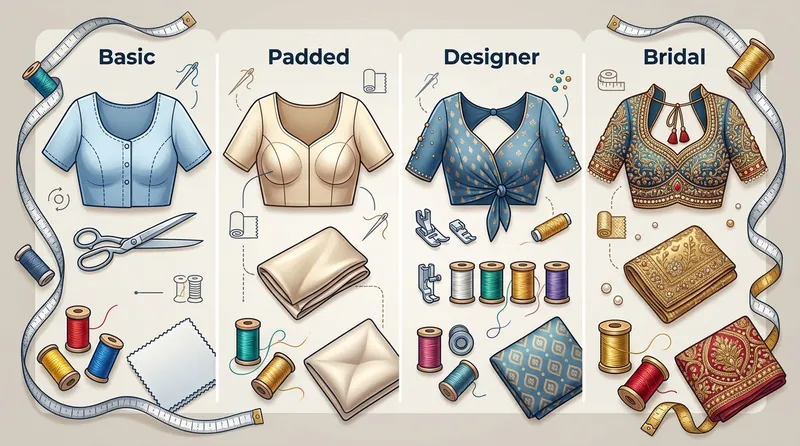
| Blouse Type & Construction | Typical Market Range (INR) | Average Labor Hours Required |
|---|---|---|
| Basic Plain Blouse (Simple round/V neck, no lining) | ₹500 – ₹1,200 | 2 – 3 Hours |
| Lined Blouse (Cotton/Crepe inner lining attached) | ₹800 – ₹1,500 | 3 – 4 Hours |
| Padded / Princess Cut Blouse (Sculpted cup fit) | ₹1,200 – ₹2,500 | 5 – 8 Hours |
| Designer / Bustier Blouse (Corsetry, boning, sheer panels) | ₹2,000 – ₹4,000 | 8 – 14 Hours |
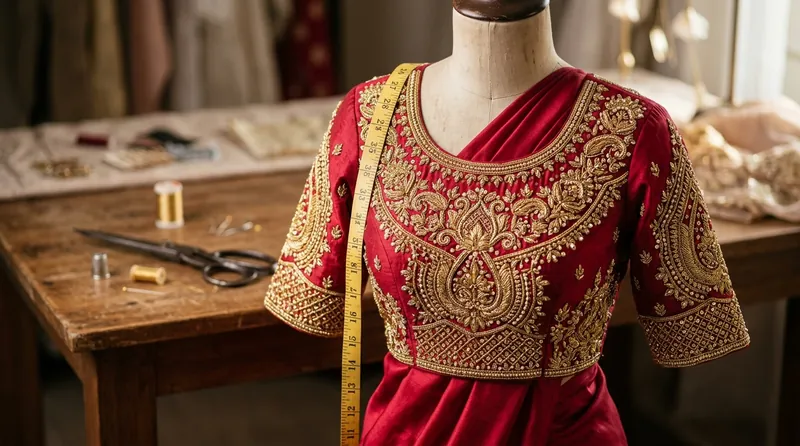
| Bridal Customized Blouse (Heavy Zardosi/Aari handwork) | ₹3,000 – ₹5,000+ | 15 – 40+ Hours |
Note: Ranges represent broad market observations across independent tailors, home workshops, and boutique studios in tier-1 and tier-2 Indian cities. Local rates vary based on exact design complexity.
Factor 1: Business Overhead & Operational Setup
Where a garment is cut and stitched directly influences its cost. A tailoring charge covers much more than the hands on the sewing machine—it amortizes the fixed and variable costs of running a business.
High-Street Boutiques & Branded Studios
- Prime Commercial Rent: High foot-traffic showroom leases in major shopping districts.
- Specialized Staff: Separate Master Cutters, Hand Embroiders, Machine Operators, and Trial Assistants.
- Machinery Investment: Heavy-duty industrial lockstitch, picot, overlock, and steam pressing stations.
- Service Guarantees: Dedicated alteration policies, trial room infrastructure, and backup power generators.
Home-Based & Neighborhood Tailors
- Zero Commercial Rent: Operating from residential units or low-rent lanes.
- Solo / Helper Model: One master craftsman handling cutting, stitching, and finishing.
- Lower Fixed Costs: Lower utility bills and minimal marketing expenditures.
- Direct Value: Lower pricing made possible by lower operational costs, not inferior tailoring skill.
For a deep dive into comparing these two tailoring models, read our full breakdown on Home Tailor vs Boutique Pricing Differences.
Factor 2: Pattern & Design Construction Complexity
Not all blouse patterns are created equal. A traditional 4-tuck plain blouse requires a standard block pattern that a master tailor can draft in under 15 minutes. Conversely, modern couture saree blouses require intricate architectural drafting.
- Neckline Construction: Deep sweetheart, sheer illusion necklines, halter neck, and backless designs require internal stay-tapes and stay-stitching so the fabric does not gape when standing or sitting.
- Padding & Underwires: High-end padded blouses do not simply drop pre-formed foam cups inside. Tailors hand-tack padded cups between two layers of cotton interfacing to ensure smooth chest contouring without hard lines.
- Bustier & Boning: Bridal and corset blouses incorporate plastic or spiral steel boning channels to hold structural tension, requiring specialized needles and double-line stitching.
Factor 3: Hand Embroidery & Embellishment Hours
Handwork is the single largest multiplier of stitching costs. Aari work, Zardosi, dabka, sequin placement, and cutdana work cannot be automated on a standard sewing machine.
Artisans work on stretched wooden frames (khada frame) laboriously inserting metallic threads and beads stitch by stitch. A moderately embellished neck and sleeve border can take 12 to 20 hours of continuous hand labor. At standard artisan hourly wages, handwork alone can add ₹1,500 to ₹3,500 to the baseline stitching charge.
Factor 4: Bridal vs Non-Bridal Engineering
Bridal stitching carries a premium because of the high stakes involved. A wedding blouse is worn under intense photography lights, heavy silk saree drapery, and emotional pressure.
Bridal orders mandate 2 to 4 trial fitting sessions, custom lining selections to prevent heavy zari work from itching the skin, invisible seam binding, and priority scheduling. Learn more in our dedicated guide on Why Bridal Blouse Stitching Costs More.
Factor 5: Delivery Urgency & Seasonal Peak Demand
Tailoring workshops run on strict production schedules. Requesting a blouse in 24 to 48 hours requires the workshop to disrupt its existing order queue, pay craftsmen overtime rates, and run machinery late into the night.
Express surcharges typically add 30% to 100% to the baseline stitching rate depending on whether the order requires same-day pickup. For details on how fast turnaround scheduling operates, explore our guide on Urgent Stitching Charges & 24-Hour Express Tailoring.