Table of Contents
The Bridal Garment Reality: Architecture, Not Just Sewing
A bride stepping into a tailoring studio often experiences sticker shock when quoted ₹3,500 to ₹6,000+ for her wedding blouse stitching, while her daily casual blouses cost ₹800.
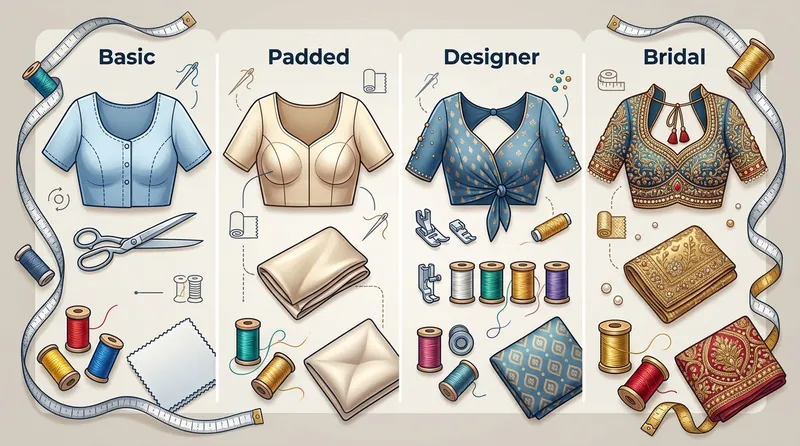
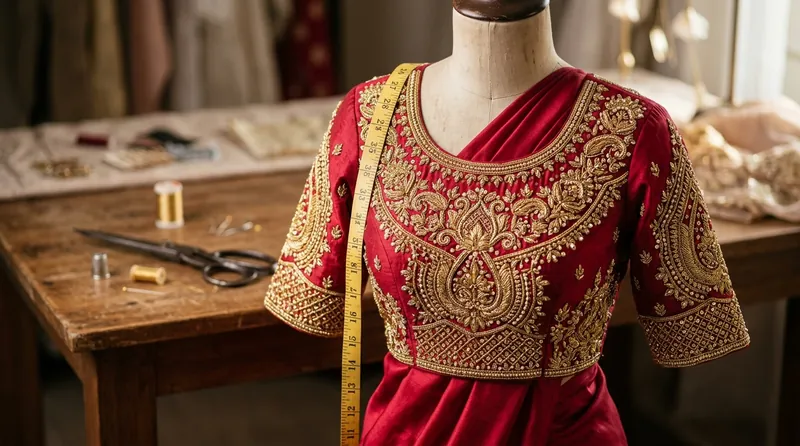
Understanding this price gap requires recognizing that a bridal blouse is not merely a piece of clothing—it is an engineered structural garment. It must support heavy zari borders, sustain 5 to 8 kilograms of draped silk saree or lehenga weight, remain comfortable over a 6-hour ceremony, and look flawless from every camera angle.
Cost Comparison: Regular vs Bridal Blouse
| Feature | Regular Saree Blouse | Bridal Customized Blouse |
|---|---|---|
| Internal Structuring | Single cotton lining layer | Double fused interfacing, built-in cups, boning channels |
| Fitting Sessions | 0 – 1 Basic Trial | 2 – 4 Rigorous Fitting Trials |
| Seam Finishing | Standard Overlock | French seams, bias binding, itch-free armhole taping |
| Handwork Level | None or simple piping | Full Aari / Zardosi / Threadwork (15 – 40+ hours) |
| Market Price Range | ₹700 – ₹1,500 | ₹3,000 – ₹6,000+ |
6 Reasons Why Bridal Blouses Command Premium Pricing
- Zero Tolerance for Error: If a regular blouse is 1/4 inch tight, it can be let out later. A bridal blouse cannot afford fit errors on the wedding day.
- Intricate Handwork Protection: Tailors must meticulously remove beads and stones from seam allowances before running sewing machine needles to prevent needle breakage and fabric tears.
- Custom Padded Corsetry: Incorporating molded cups that match the bride's exact bust shape without creating unnatural bulges.
- Invisible Neckline Taping: Using specialized stay-tapes inside sheer or deep-back necklines so the fabric stays flat against the skin during movement.
- Heavy Dupatta / Saree Anchor Tacks: Hidden shoulder snaps and reinforced armhole seams designed to anchor heavy drapes securely.
- Risk Management & Backup Infrastructure: Priority scheduling, power backup arrangements during monsoon, and dedicated master tailors on call.
The Importance of Multiple Fitting Sessions
Boutiques schedule fitting sessions in stages:
- Canvas / Lining Trial: Testing the basic pattern fit on raw cotton before cutting expensive bridal silk.
- Structure & Cup Trial: Verifying padding position and neckline depth.
- Final Finished Trial: Confirming sleeve ease, hook tension, and overall comfort with full bridal drapes.
For further comparisons on shop models, explore our guide on Home Tailor vs Boutique Pricing.
Frequently Asked Questions
Ideally 3 to 4 weeks prior to the wedding date. This allows sufficient buffer for handwork frame setup and 2 fitting sessions. If you are in a rush, consult our Urgent Stitching Guide.
Yes, most boutiques quote a baseline stitching charge (e.g. ₹2,000) and list hand embroidery charges separately based on design density (e.g. ₹1,500 – ₹4,000). Always request an itemized breakdown.