Table of Contents
Why Your Bridal Tailor Decision Matters
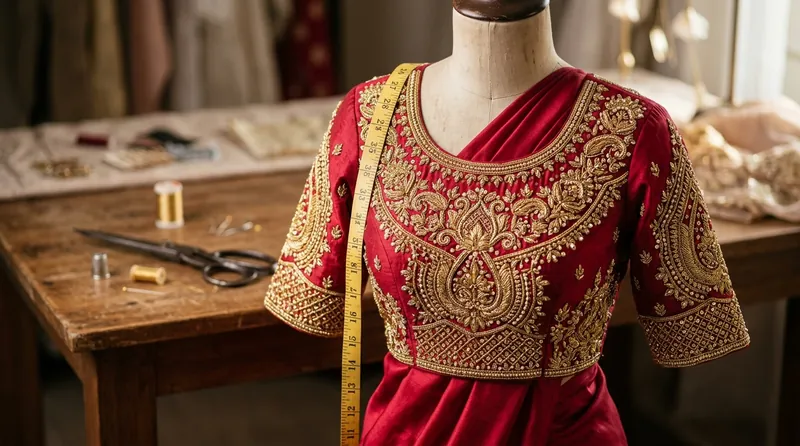
A wedding saree or lehenga blouse is captured in photographs that endure for generations. Unlike everyday wear, a bridal blouse must hold heavy silk drapery, accommodate internal corsetry, remain itch-free during hours of ceremony rituals, and fit without single puckering seam.
Choosing the right tailor requires evaluating craftsmanship, trial protocols, and communication—not just selecting the lowest price quote.
5-Step Evaluation Checklist for Bridal Tailors
1. Inspect Real Portfolio Photos
Ask to see photos of real brides in completed garments—not catalog stock photos downloaded from Pinterest. Examine armhole finishing, bustier contours, and neck lay.
2. Verify Trial Session Protocol
A reputable bridal studio schedules 2 to 3 trial sessions (canvas lining trial, cup placement trial, final trial). Avoid shops that refuse intermediate trials.
3. Demand Itemized Quotes
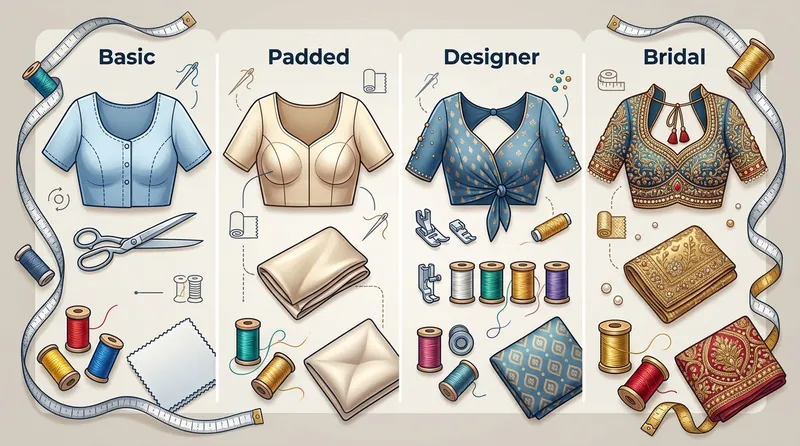
Ensure the quote clearly separates baseline stitching, padded cup additions, inner lining, and Aari/Zardosi handwork.
4. Confirm Delivery Timelines
Set final delivery at least 7 to 10 days before the wedding date to allow buffer for body weight fluctuations or minor adjustments.
Red Flags to Avoid Before Handing Over Silk
- No Written Order Form: Avoid shops that rely on verbal agreements without written neck depth notes or order receipts.
- Vague Handwork Promises: Ensure embroidery designs are sketched onto paper or fabric before artisans begin frame work.
- Refusal to Show Backing Finish: Quality studios use itch-free armhole taping to protect delicate skin from rough metallic Zardosi wire.
Learn why bridal tailoring costs reflect this precision in our Bridal Blouse Cost Guide.
Evaluating Price Quotes Fairly
Compare quotes between home tailors and boutique studios based on operational overhead, trial infrastructure, and risk guarantees. Read our full comparison on Home Tailor vs Boutique Pricing.