Table of Contents
Why Fabric Behavior Impacts Tailoring Labor
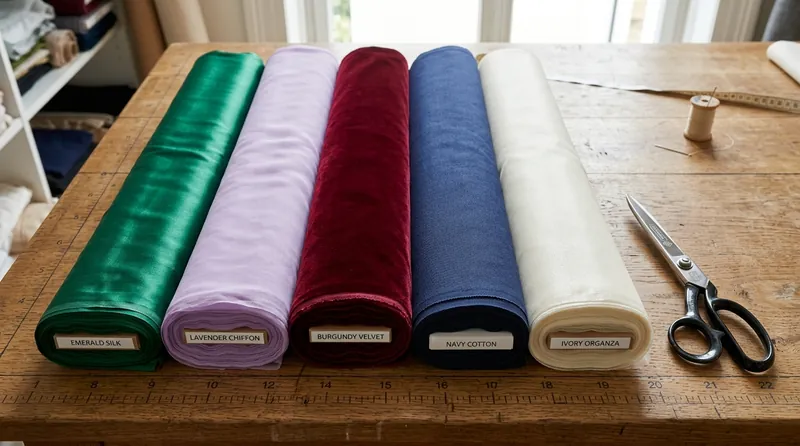
Customers often bring different textiles—cotton, raw silk, sheer georgette, velvet, or organza—and wonder why tailors quote different rates for the exact same neckline design.
Stitching difficulty depends directly on fabric weave stability, slippage, fraying tendency, and needle sensitivity. A forgiving cotton fabric cuts cleanly in 10 minutes, whereas slippery chiffon or delicate organza requires paper backing, specialized micro-needles, and double the cutting time.
Fabric Difficulty & Price Impact Matrix
| Fabric Type | Handling Difficulty | Typical Price Impact | Key Challenge for Tailor |
|---|---|---|---|
| Pure Cotton | Low (Baseline) | Standard Rate | Stable weave, zero slippage |
| Raw / Art Silk | Medium | + 10% to 15% | Requires sharp needles to prevent pulls |
| Chiffon & Georgette | High | + 15% to 30% | Highly slippery, frays easily, sheer seams |
| Velvet | High | + 20% to 30% | Nap directional crushing, bulky seams |
| Organza & Tissue Silk | Very High | + 25% to 40% | Stiff yet delicate, seam slippage risk |
Fabric-by-Fabric Handling Guide
Chiffon & Georgette Handling
Sheer fabrics shift on cutting tables. Master cutters must use tissue paper backing while stitching to prevent machine feed dogs from dragging the delicate weave. Seams require clean French binding.
Velvet & Heavy Brocade
Velvet has directional pile (nap). Cutting panels in opposing directions causes color shade mismatches under light. Steam pressing requires specialized needle boards to avoid flattening the pile.
Pure Silk Care
Pure silk shows every pin mark. Tailors must use ultra-fine #11 needles. For standard pricing details, check our 2026 Blouse Price Guide.